
Mobile apps don't perform exams, and this warning needs to be at the beginning, not at the bottom. The apps on this list are for estimate heart rate and, most importantly, for register The values you measured with your own device. None of them measure blood pressure — that requires a blood pressure monitor with a cuff on the arm — and none of them diagnose arrhythmia, hypertension, or any other condition. Diagnosis is done by a doctor; the cell phone helps organize the information you bring to them.
That said, monitoring heart rate and blood pressure at home is a practice recommended by cardiologists, and cell phones play a real role in this routine. Those who live with hypertension, diabetes, or simply want to understand how their body responds to exercise and stress benefit greatly from swapping the little piece of paper on the refrigerator for a record with date, time, and graph. In this guide, you'll see what your cell phone can and can't do, which apps are worthwhile, how to measure in a way that the number means something, and how to protect yourself from scams circulating in this category.
What your phone can estimate (and what it can't)
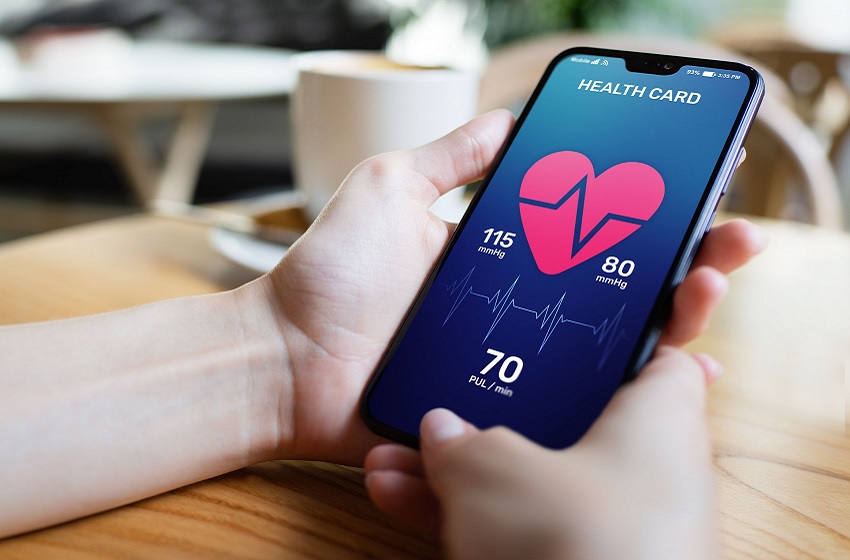
When you touch your finger to the camera with the flash on, the sensor detects your skin changing color slightly with each heartbeat, because the volume of blood in the superficial vessels varies. By counting these pulses, the app arrives at an estimate of... How many times did your heart beat per minute?. This technique is called photoplethysmography and it's the same idea used by the green sensor on the back of smartwatches.
Does it work? As an estimate of well-being, it works reasonably well at rest, with the finger still and without crushing the lens. But it's sensitive to everything: cold hand, tremor, artificial nail, ambient light, phone case obstructing the flash. Therefore, the result should be interpreted as "more or less this," never as a reading from hospital equipment.
Now what about the cell phone? no It does, even though some apps advertise it:
- It does not measure blood pressure. Pressure is the force within an artery; it can only be measured by compressing the arm with a cuff. Heart rate and blood pressure are different quantities: it's possible to have a normal pulse and high blood pressure at the same time.
- It doesn't perform electrocardiograms through the camera. ECG requires electrodes in contact with the skin.
- It does not reliably detect arrhythmia. Some apps can indicate irregular heartbeats, but this is a warning to seek evaluation, not a diagnosis.
- It does not replace the oximeter. Measuring oxygen saturation using a cell phone camera has no clinical validation.
The importance of regular follow-up.
Blood pressure and pulse vary greatly throughout the day: they rise with coffee, stress, pain, and exertion, and fall during sleep. A single measurement, taken on a day when you were nervous at the doctor's office, tells us little. What has clinical value is the... seriesMultiple measurements, taken at the same times, over days or weeks. Such a record shows trends, whether the medication is working, and if any time of day is an outlier.
This is where the app comes in. It doesn't improve the quality of the measurement—that's done by the device and your technique—but it greatly improves the quality of the... information that arrives at the doctor's office. A report with thirty organized measurements is worth more in a fifteen-minute consultation than any memory-based account.
The best apps for estimating pulse and recording blood pressure.
The six apps below are published on Google Play, with the developer identified. Three of them (Instant Heart Rate, Cardiograph, and Welltory) estimate heart rate using the camera; the other three are health diaries, designed to store what you measured with a real device. None of them measures blood pressure on their own.
1. Instant Heart Rate
One of the oldest and best-known apps in its category. You place your finger on the camera and it estimates your heart rate in a few seconds, saving the value in a history. It has separate modes for rest and post-exercise, which helps to compare similar situations over time. Remember that the number is an estimate of well-being, not a clinical measurement. View on Google Play.
2. Cardiograph
Simple and straightforward, the Cardiograph also uses the camera to estimate the pulse and allows you to maintain different profiles on the same device — useful when two people in the house are monitoring their own routine. It saves the location and time of each estimate, which makes it easier to notice patterns, such as a higher pulse always in the late afternoon. In the store it appears as “Cardiograph – Cardiograph”, from MacroPinch. View on Google Play.
3. OMRON connect
This is the app for those who have a real blood pressure monitor. It's the official OMRON app: if your monitor has Bluetooth, the systolic, diastolic, and pulse readings are automatically sent to your phone; if not, you enter them manually. It calculates averages over periods, weekly graphs, and exports the history as a PDF for reference. View on Google Play.
4. Withings Health Mate
It brings together blood pressure, weight, steps, and sleep in one place. It accepts manual data entry even without any of the brand's equipment, and organizes everything in an easy-to-read timeline. It's a good choice for those who want to see the relationship between habits and numbers — for example, how the weeks in which they walked the most appear on the graph. View on Google Play.
5. Samsung Health
It comes pre-installed on most Samsung phones and has dedicated fields for recording blood pressure and heart rate, as well as water, weight, and physical activity. The advantage is not needing to install anything else; the limitation is that the reports are more generic than those of a dedicated app. View on Google Play.
6. Welltory
Welltory estimates heart rate and heart rate variability to generate energy and stress indicators. It's a wellness app, and it makes that clear: the indices are for you to observe trends in your routine, sleep, and workload, not to evaluate your heart from a medical point of view. View on Google Play.
On the iPhone, the app Health, The app, which comes pre-installed, has native heart rate and blood pressure monitoring fields and is usually sufficient for daily tracking. Many of the apps mentioned above also have iOS versions, although the name may change in the Brazilian app store. Heart Rate Instant (the Instant Heart Rate), Classic Cardiograph, OMRON Connect, Withings, Samsung Health It is Welltory. Always download from official app stores: APK files received in group messages are the most common way to install a fake health app on your device.
How to obtain a more consistent estimate
If you're going to use the camera to track your pulse, at least make the measurements comparable to each other:
- Sit still and remain still for five minutes before measuring.
- Warm your hands if they are cold — cold hands greatly hinder optical reading.
- Cover the camera It is Use the flash with your fingertip, without pressing too hard. Too much pressure interrupts the flow and distorts the result.
- Remain still and silent during the seconds of the measurement.
- Always measure at the same time and under the same conditions so that the values can be compared.
- Note the context in the app: coffee, workout, bad night's sleep, forgotten medication.
And blood pressure: how to measure it correctly.
For blood pressure measurement, the best option is an arm blood pressure monitor. The correct technique changes the result more than people imagine: sit for five minutes beforehand, with your back supported and feet flat on the floor, without crossing your legs; use the cuff on your bare arm, two fingers above the bend of your elbow and at heart level; avoid coffee, cigarettes, and exercise in the half hour beforehand; take two measurements with a one-minute interval. Then simply enter the values into the app. The Ministry of Health maintains public guidelines on this. high blood pressure which is worth reading. If your interest is specifically in pressure diaries, we have a guide dedicated to that. apps for recording and monitoring blood pressure.
How to transform history into something useful for consultation.
Having three hundred disorganized records doesn't help anyone. What doctors usually ask for is very specific, and apps deliver that in just a few taps.
- Choose a time window. Usually, the two weeks prior to the appointment are sufficient, with measurements taken morning and night.
- Register in duplicate. Two readings taken consecutively, one minute apart, at each time point. Most apps accept both and calculate the average automatically.
- Don't delete the "bad" values. It's common for people to delete the measurement that alarmed them. That's precisely the one the doctor is interested in.
- Write down the medication. Note whether you measured before or after taking the medication; this completely changes the interpretation of the result.
- Generate the report as a PDF. Use the export menu and take it with you on your phone or print it out. Some apps allow you to send the file via email directly to the doctor's office.
- Also bring the device. During your first consultation, when you present your medical history, the professional can check if the cuff is the correct size for your arm, which is one of the biggest sources of error when done at home.
When the app doesn't work: seek support.
This app is for routine use, not emergencies. Chest pain, shortness of breath, fainting, persistent palpitations, a feeling of tightness radiating to the arm or jaw, sudden weakness on one side of the body, or slurred speech require immediate attention — call SAMU 192 or the nearest emergency room. In these cases, don't waste time opening your phone to measure anything.
Common scams in this category
- “"Measure your blood pressure using your fingerprint or camera.". This is the most common scam. The displayed number is fabricated using age, weight, and statistical averages. Many of these apps are listed as entertainment in the app store itself.
- Installation via APK. “"Unlocked version" sent via link is the preferred vector for programs that steal banking data. Use only Google Play and the App Store.
- A subscription disguised as a free trial. Check the price and automatic renewal on the app page before accepting.
- Too many permissions. A heart rate app needs the camera. It doesn't need your contacts, SMS, or location all the time.
- Promise to "control blood pressure without medication". This is not an app, it's misleading advertising and sometimes the sale of unregistered products. Anvisa.
Health data is considered sensitive data under the LGPD (Brazilian General Data Protection Law). Before entering a complete history, read the app's privacy policy, check if it shares information with third parties for advertising, and prefer well-known developers with devices and reputations to defend.
FAQ – Frequently Asked Questions
P: Algum desses aplicativos mede pressão arterial pelo celular?
A: No. No app measures blood pressure using a cell phone on its own. They record the values you measured with a device that uses a cuff.
P: A estimativa de batimentos pela câmera é confiável?
A: It's an estimate of well-being. It serves to track trends at rest, but varies with hand temperature, movement, and lighting. It is not a clinical measurement.
P: Posso usar esses aplicativos para descobrir se tenho hipertensão ou arritmia?
A: No. They are recording and estimation tools. Diagnosis and medication adjustment are medical decisions, made with appropriate tests.
P: Smartwatch mede pressão?
A: Common watches sold in Brazil, including the Apple Watch, do not measure blood pressure. They estimate heart rate using an optical sensor; some perform a single-lead electrocardiogram, which is a separate test.
P: Esses aplicativos são gratuitos?
A: All have a free version sufficient for registration and tracking. Advanced features may require a subscription, which is always indicated on the app's page in the official store.
Conclusion
Your cell phone is a great health notebook and a terrible doctor's office. It estimates your pulse, accurately records the numbers you measure, shows trends in a graph, and produces a report that saves time during consultations—all of which has real value. What it doesn't do, and no app will, is measure blood pressure, give a diagnosis, or replace a professional's evaluation. Use the apps on this list to organize your routine, keep an arm blood pressure monitor at home, and take your medical history to the doctor. To complete your monitoring, also see our guides on... glucose monitoring, of home workout and of sleep monitoring.