
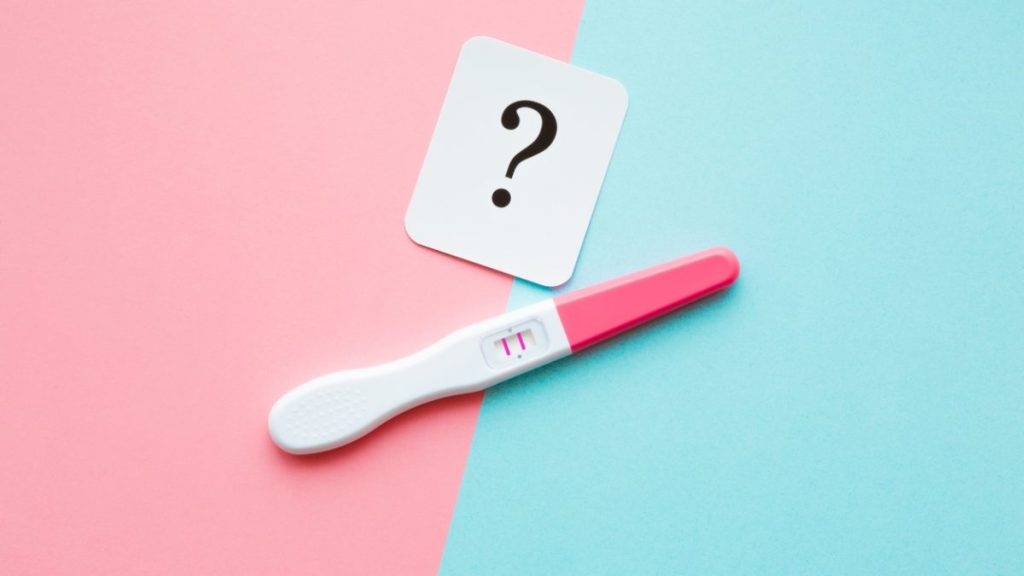
No mobile app performs pregnancy tests. Confirmation depends on detecting the hCG hormone, and this only happens with a pharmacy test (urine) or with a beta-hCG blood test done in a laboratory. What the apps on this list do is something else entirely, quite useful: they track the menstrual cycle, estimate the fertile period, and organize symptoms, helping you decide. when It's worth taking the real test. The estimates are calculated from the data you enter and may be wrong.
Let's make it clear from the start: if you experience a delayed period, suspect pregnancy, or have any other concerning symptoms, seek a home pregnancy test or consult a healthcare professional. Calendar apps are for tracking, not diagnosis.
That said, these apps have become daily companions for millions of people—both those trying to conceive and those who simply want to better understand their own cycle. Below, what they actually do and five options available in official app stores.
How do menstrual calendar apps work?
It's simpler than it seems. You enter the start and end dates of your periods; the app calculates the average length of your cycle and, based on that, projects upcoming dates and the window in which ovulation is likely to occur.
Some apps refine this calculation by requesting additional data: basal body temperature measured upon waking, characteristics of cervical mucus, ovulation test results, and symptoms recorded that day. The more consistent the record, the closer the estimate tends to be to reality.
But there are important limitations:
- Irregular cycles greatly reduce accuracy. The projection depends on regularity; those with variable cycles receive broader, but less reliable, estimates.
- Stress, travel, illness, and weight changes can shift ovulation. — and the app has no way of knowing that.
- Early pregnancy symptoms are often confused with premenstrual symptoms. No list of symptoms within an app can replace a test.
- They are not suitable as a method of contraception. Using the fertile window calculated by an app as the sole method of preventing pregnancy has a high failure rate.
5 apps to track your cycle, fertility, and pregnancy.
1. Flo
O Flo It is one of the most widely used menstrual calendars in the world. It tracks the cycle, estimates the fertile window, records symptoms and mood, and organizes everything in an easy-to-read daily dashboard. It also offers educational content about reproductive health.
It has a pregnancy tracking mode for those who have already confirmed their pregnancy with a test, and anonymity tools for those concerned about the privacy of their records. The predictions, as with any app of this kind, are estimates based on your history.
2. Clue
O Clue It has a sober approach, without visual infantilization, and is known for its transparency in explaining where the predictions come from. It records menstruation, pain, mood, sleep, sexual activity, and other variables, building a fairly complete history of the cycle.
It's a good choice for those who want to understand their own body with data, and not just receive a date projected on a screen.
3. Ovia Cycle & Pregnancy Tracker
O Ovia Cycle & Pregnancy Tracker (The app appears on Google Play under this name) is specifically designed for those trying to conceive. In addition to the calendar, it allows users to record basal body temperature, cervical mucus, and ovulation test results, refining the estimation of the fertile window.
It also offers content on fertility and reports that can be taken to the appointment. It remains an estimate: confirmation of pregnancy, when there is a delay, comes from the test.
4. Minha gravidez e meu bebê hoje (BabyCenter)
O My pregnancy and my baby today, The BabyCenter app is best known for its week-by-week pregnancy tracking, with content on baby development and maternal health, as well as a large community of users.
It makes more sense after pregnancy is confirmed, when the focus shifts to monitoring the progress and getting answers to daily questions — always remembering that internet forums are not a substitute for prenatal care.
5. Gravidez+ (Pregnancy+)
O Pregnancy+ It's a pregnancy companion with a sophisticated interface: week counter, images of fetal development, to-do list, appointment log, and space for a pregnancy diary.
Like BabyCenter, it's a post-confirmation follow-up app, not a tool to find out if you're pregnant.

Pregnancy + Week-by-Week App
Note: 4.9
Downloads: 50 mi+
Platform: Android
Price: Free, with in-app purchases.
Where to watch: listing on Google Play
What actually confirms a pregnancy?
Since no app fulfills this role, it's worth knowing what the real methods are:
- Pharmacy test (urine). Detects the hCG hormone. It is usually more reliable from the first day of a missed period and with the first urine of the day. Follow the reading time indicated on the packaging.
- Beta-hCG blood test. Made in a laboratory, it detects the hormone earlier and reports the concentration, not just positive or negative.
- Medical evaluation and ultrasound. They confirm the pregnancy, estimate the gestational age, and check for implantation. This is the stage that begins prenatal care.
The app's role in this process is to help you notice the delay and remember the date of your last period—information that the healthcare professional will ask for during your first appointment.
How to choose between these apps
- Do you just want to follow the cycle? Clue and Flo do a good job, with simple storytelling and a clear historical overview.
- Are you trying to get pregnant? Ovia is the most focused on fertility, with fields for basal body temperature and ovulation tests.
- Have you confirmed the pregnancy yet? Gravidez+ and BabyCenter are designed for week-by-week monitoring.
- Is privacy a priority? Compare the privacy policies and data security section on the store's page before installing. Menstrual cycle data is sensitive information.
How to log your cycle in a way that the app is useful.
The quality of the estimate depends entirely on what you record. Some practices are very helpful:
- Always mark the first day of bleeding. This is the data that structures the entire calculation. Simply recording "more or less that week" renders the forecast useless.
- Also note the duration. Cycles with very short or very long bleeding periods change the interpretation of the history.
- Give the application at least three months. Before that, he is still working with generic averages, not with his standard.
- If you are measuring basal temperature, keep the method the same. Same time every day, upon waking, before getting out of bed. Measurements taken under different conditions generate noise.
- Record events that are out of the ordinary. Travel, illness, medication changes, and periods of stress explain variations that the app alone cannot understand.
This history has practical value that goes beyond the screen: during a consultation, being able to show the average duration of the last cycles and the exact date of the last menstruation greatly shortens the conversation and helps the professional to provide better guidance.
A missed period does not automatically mean pregnancy.
It's important to remember that the menstrual cycle is affected by many things. Intense stress, weight changes, changes in sleep patterns, strenuous exercise, starting or stopping birth control, and various health conditions can delay menstruation without pregnancy. The opposite is also true: light bleeding can occur at the beginning of a pregnancy and be mistaken for menstruation.
Therefore, the app serves to identify deviations from your pattern—not to explain the reason for them. The explanation comes from a test, when pregnancy is suspected, and from an evaluation by a healthcare professional when the delay is repeated, accompanied by severe pain, abnormal bleeding, or any other worrying symptom.
Privacy: the care that's worth it
Cycling apps store private information. Before choosing one, it's worth checking a few things:
- Does the privacy policy clearly explain what data is collected and with whom it is shared?
- Is it possible to use the app without linking social media accounts?
- Is there an option to export and delete all your data?
- Does the app allow password or biometric locking within the app itself?
Always install from the Google Play Store or the App Store. Installation files obtained outside of these stores do not go through security checks and may expose exactly the type of data you most want to protect.
Myths circulating about "pregnancy tests via cell phone"“
The search for an instant test on your cell phone fuels a series of promises that don't hold up. The most common are:
- “"The camera analyzes your urine and gives you the result."” The camera doesn't produce a chemical reaction. There are, however, physical pharmacy tests whose results can be photographed by an app for record-keeping purposes, but it's the test strip that detects the hormone, not the phone.
- “"The app identifies pregnancy by symptoms."” Nausea, sleepiness, breast tenderness, and mood swings occur in both premenstrual tension and early pregnancy. No questionnaire distinguishes between the two.
- “"There is a free online test with immediate results."” What exists are questionnaires that return a generic probability. There is no actual exam taking place — and answering these pages usually serves only to collect personal data.
- “"The app detects the baby's heartbeat through the microphone."” Cell phone microphones do not reliably pick up fetal heartbeats; this is done with specialized equipment during prenatal care.
Maintaining this skepticism avoids two bad things: the anxiety of trusting a fabricated result and the risk of handing over intimate information to services with no commitment to privacy.
Common questions
Is there an app that does pregnancy tests on your phone?
No. Cell phones don't detect hormones. Any app that promises a pregnancy test result is, at best, providing an estimate based on dates and symptoms you've entered—and that estimate has no diagnostic value.
Are predictions about the fertile period reliable?
These are estimates. They work best with regular cycles and consistent tracking, but even then, ovulation can shift for reasons the app doesn't detect.
Can I use the app to avoid pregnancy?
Not as a sole method. The fertile window calculated by the app has a significant margin of error. Talk to a healthcare professional about contraceptive methods that are right for you.
When should I take the test?
Generally, starting from the first day of a missed period, follow the instructions on the test packaging. In case of doubt or inconclusive results, a beta-hCG blood test can resolve the issue.
Are these apps free?
All can be downloaded at no cost and offer the main registration functions for free. Some have an optional subscription with additional content and reports.
Can I use more than one application at the same time?
It's possible, but it's usually counterproductive. Each app calculates the projection using its own method, and seeing two different dates on the screen generates more confusion than information. It's better to choose one, update it consistently for a few months, and only switch if it doesn't meet your needs.
Conclusion
Menstrual calendars and fertility apps are good tools for understanding your cycle, identifying patterns, and knowing when to take a test. What they don't do—and none of them do—is confirm a pregnancy.
Use the app as an organized diary, download it from the official store, protect the privacy of your data, and if you suspect anything, seek a home pregnancy test, a blood test, or guidance from a healthcare professional.