
Let's start with the essentials: No app can detect pregnancy.. There is no such thing as an online pregnancy test, using photos, a camera, or questionnaires. What menstrual calendar apps do is record data you enter—dates of menstruation, symptoms, sexual activity—and, based on that history, estimate The fertile period and the likely day of the next menstruation. Estimate, not result. Confirmation only comes through a pharmacy test (which detects the hCG hormone in urine), a blood test, or a medical evaluation.
Having said that, these apps are truly useful. They help you understand your own cycle, recognize symptom patterns, and arrive at your appointment with organized information—which makes a difference when talking to your gynecologist. Below are the main ones, what each one actually does, and how to interpret what they show.
How do these apps calculate the "probability of pregnancy"?“
The calculation is statistical and works like this: based on the dates you record, the app estimates the average length of your cycle and projects when ovulation would have occurred. Since the egg survives for about 24 hours and sperm can survive for a few days in the body, the app marks a window of "fertile days" around this estimated date.
The limitations of this method are well-known and important:
- Ovulation varies. Stress, travel, illness, weight changes, poor sleep, and intense exercise can all shift the date—and the app has no way of knowing that.
- Irregular cycles disrupt the calculation. Those with highly irregular cycles, polycystic ovary syndrome, or who are in perimenopause receive unreliable predictions.
- A symptom is not a sign. Nausea, breast tenderness, fatigue, and cramps can occur during both PMS and early pregnancy. No app distinguishes between the two.
- It does not work as a method of contraception. Common calendar apps are not contraceptives and should not be used for that purpose. Fertility awareness methods require professional guidance and rigorous daily measurements.
The best menstrual calendar apps
Clue
O Clue It is one of the most respected in its category, with neutral language and without the clichés of a "pink app". The home screen is a circle that shows what phase of your cycle you are in, and the symptom log is quite detailed: flow, cramps, mood, skin, sleep, headache, energy.
After a few months of use, it shows patterns — for example, on which days migraines tend to occur. This is the information worth taking to the consultation. Ovulation predictions, as with any app, are estimates based on your history.
How to download: Free on the Google Play Store and the App Store, with extra features available through a subscription.
Flo
O Flo It's probably the most popular. Besides the calendar, it offers a large library of content in Portuguese about cycles, fertility, pregnancy, and intimate health, and an anonymous community for sharing experiences.
It has an "anonymous mode" that disconnects data from your identity, a relevant feature for those concerned about privacy. Even so, it's worth reading the privacy policy and reviewing what you agree to share—menstrual cycle data is sensitive information.
How to download: Free on official stores, with an optional subscription for premium content.
Ovia
O Highway It is aimed at those trying to conceive. It accepts more specific data entries — basal body temperature measured upon waking, characteristics of cervical mucus, results of ovulation tests from a pharmacy — and uses this to refine the estimation of the fertile window.
It's the most detailed on the list for this purpose, but it requires discipline: temperature measured at the same time every day, before getting out of bed. Without consistency, the chart means nothing.
How to download: Free on the Google Play Store and the App Store.
Glow
O Glow It combines a calendar, fertility tracking, and an active community. Its strong point is the reporting: it organizes months of data into graphs that can be exported and displayed during consultations.
A note about the community: another person's account is not evidence. It serves as emotional support, not as a reference for making any decisions about your health.
How to download: Free in official stores, with paid features.
Calendário Menstrual (Period Tracker)
O Period Tracker It's the simplest and most straightforward: you mark the start and end of your period, note basic symptoms, and that's it. No community, no articles, no excessive screen time.
It's the best option for those who just want to know when their next period is coming and don't like apps full of notifications. It has password protection, useful for those who share a phone.
How to download: Free on the Google Play Store, with ads, and a paid version without ads.
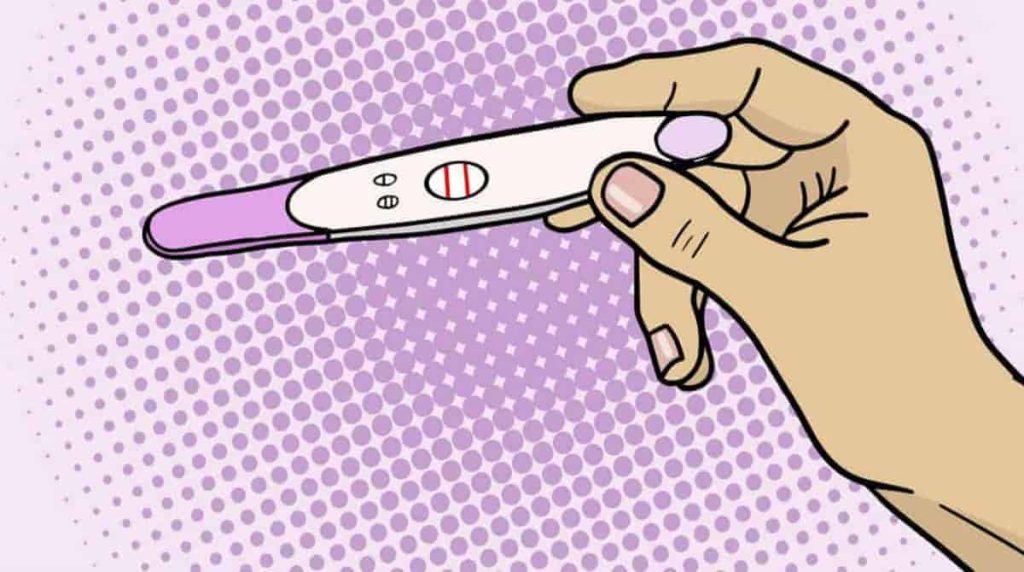
How can you really know if you are pregnant?
If your period is late, the reliable way is short and cheap:
- Pharmacy test (urine). It detects the hCG hormone. It works best from the first day of a missed period and with the first urine of the morning, which is more concentrated. It is inexpensive and does not require a prescription.
- Blood test (beta hCG). More sensitive: it can indicate pregnancy a few days before a missed period and also measures the amount of the hormone. Made in a laboratory, available through the SUS (Brazilian public health system) with a doctor's order.
- Medical consultation. Confirm the result, calculate the gestational age, and begin prenatal care — or investigate other causes of the delay, of which there are several.
A negative test taken too early can give a false negative. If the delay continues, repeat the test after a few days or seek medical attention. In Brazil, basic health units offer free testing and referrals for prenatal care.
A missed period doesn't always mean pregnancy.
Several factors can delay or stop menstruation, and it's common for a person to spend weeks worried because of one of them:
- Intense stress, grief, a major change in routine, or sleep deprivation.
- Rapid weight loss or gain and very intense physical exercise.
- Starting, changing, or stopping birth control.
- Thyroid disorders, polycystic ovary syndrome, and other hormonal conditions.
- Infections, use of certain medications, and approaching menopause.
If your period is more than a few months late, accompanied by severe pain, unusual bleeding, or very irregular cycles, schedule an appointment. Bringing your app history will be very helpful in this conversation.
The phases of the cycle, to understand what the app shows.
The colors and icons on the home screen of these apps make much more sense when you know what's being represented. The cycle is usually divided into four phases, counted from the first day of menstruation:
- Menstrual: The first few days, with the bleeding. That's day 1 of the cycle — and that's the date the app uses as a reference for everything else.
- Follicular: After bleeding, the body prepares for the maturation of an egg. This is usually the phase when we have the most energy.
- Ovulatory: The period around the release of the egg, which the app marks as the fertile window. It is the estimate most prone to error, because the actual date varies.
- Lutea: The second half, until the next menstruation, is when the symptoms normally associated with PMS appear.
The famous "28-day cycle" is just a reference average: varying between 21 and 35 days is common and doesn't indicate a problem on its own. That's why the app gets closer to reality after three to six months of recording—it starts using your pattern instead of the generic one.
How to register correctly so the app makes fewer mistakes.
The prediction is only as good as the data you enter. Four habits greatly improve the result: marking the first day of bleeding on the day it happens, not from memory; recording the end of menstruation; noting relevant symptoms even outside the menstrual period; and reporting when something deviated from the norm, such as a long trip, an infection, a change in medication, or a week of very poor sleep. It is precisely these events that shift ovulation and explain why the app "got it wrong" that month.
Privacy: a worthwhile concern.
Cycle data, relationship information, and symptom data are sensitive personal information. Before choosing an app, it's worth spending five minutes checking these points:
- Read the data security section on the app's listing in the Google Play Store: it explains what data is collected and whether it is shared with third parties.
- Choose apps that allow anonymous use or use without linking to social networks.
- Enable password or biometric lock within the app, if available.
- Review the permissions granted — a menstrual calendar does not need access to contacts or a microphone.
- When uninstalling, delete the account through the app settings; removing the icon does not delete what is on the server.
And what happens after a positive result?
Once pregnancy is confirmed, most of these apps offer a pregnancy tracking mode: week count, appointment calendar, and content about each stage. It's a convenient tool for organizing dates and remembering exams, and nothing more. Prenatal care is provided by a healthcare professional, with in-person consultations, laboratory tests, and ultrasounds—and begins as early as possible, ideally in the first trimester. In Brazil, prenatal care is free through the SUS (Unified Health System), starting at the nearest basic health unit.
Veja também:
Common questions
Existe algum aplicativo que faz teste de gravidez pelo celular?
No. Pregnancy is detected by a hormone present in urine or blood, and no cell phone sensor can measure that. Any app that promises this result is deceptive—and some charge for an "answer" that is just a questionnaire.
O aplicativo acerta a data da ovulação?
He estimates. Accuracy improves with months of recording and regular cycles, and worsens considerably with irregular cycles. Over-the-counter ovulation tests and basal body temperature tracking provide a better reference.
Posso usar o app como anticoncepcional?
No. Calendar apps are not contraceptive methods. Talk to a healthcare professional about the method that's right for you.
Quando o teste de farmácia é confiável?
Starting on the first day of your missed period, use the first urine of the day and follow the reading instructions on the packaging. If the result is negative and your period is still late, repeat the test a few days later or take a blood test.
Vale pagar a versão premium desses apps?
For most people, the free version already delivers what matters: cycle tracking, prediction of the next period, and symptom history. The premium version usually adds content and reports, but not accuracy.
Conclusion
Menstrual calendar apps are worthwhile for what they truly do: organize your history, reveal patterns, and help you get to know yourself better. Clue and Period Tracker are good for those who just want to track their cycle; Flo appeals to those who like content; Ovia and Glow are more suitable for those trying to conceive.
None of these methods confirm a pregnancy. If a period is late, the next steps remain a home pregnancy test, a blood test, and a doctor's appointment. This content is for informational purposes only and does not replace professional evaluation.