It passed by the radar, you saw the flash, and you were left with that feeling of a bill to pay. The question that follows is always the same: how long does it take to appear, where can I check without leaving home, and how many points will it cost on my license? All of this can be resolved via mobile phone, with official and free apps.
This guide shows where to look, what each value displayed on the screen means, when the discount is worthwhile, and in what situations it's still possible to appeal. None of the steps require a broker: the process is open to the driver from beginning to end.
The official app has changed its name.
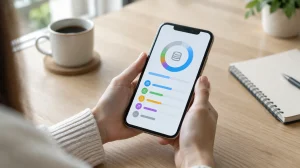
Anyone looking for the Digital Traffic Wallet in the app store will no longer find it under that name. The Serpro app for the National Traffic Secretariat has changed. Brazilian driver's license, This update brings together what already existed in the CDT app and adds the journey to obtaining your first driver's license. Those who already had the app installed received the update; those who are installing it now should look for the new name.
What can be seen in it?
The digital driver's license (CNH) has the same legal value as the printed document, as does the digital vehicle registration certificate (CRLV) in your name, recorded traffic violations, accumulated points, and notifications sent by traffic authorities. Electronic traffic ticket notifications are also received through this digital system when your state participates in it.
What you need before opening
A gov.br account. The bronze level already unlocks most queries, but digital documents and full scoring usually require silver or gold level — which can be achieved by validating the account through the bank, the facial recognition app, or your driver's license information. If your account is bronze, it's worth upgrading the level beforehand: it's a one-time thing and unlocks the rest.
How to check, step by step.
- Install the Brazilian driver's license app from your phone's official app store and open it.
- Log in with your gov.br account — the same login used for other public services.
- On the home screen, tap the violations section to view the tickets issued in your name.
- Check each item: date, location, issuing authority, classification, and status (under defense, notified, paid).
- Open the score to see how many points are valid and when each one is removed from the count.
- Activate app notifications to receive the next traffic violation notice as soon as it is issued.
If the fine was issued on a federal highway, it will also appear in the Federal Highway Police system; if it was on a municipal road, it will appear on the city hall's website or the city's traffic authority's website. The Department of Motor Vehicles (Detran) in your state manages your driver's license points.
The two notifications that arrive
The process has two stages, and confusing the two is the most common mistake made by those trying to defend themselves.
The first one is notification of infraction. She informs that the infraction has been recorded and opens a period for preliminary defense, which cannot be less than 30 days from the date of issuance. This notification must be issued within 30 days of the date of the infraction—after that, the report must be filed.
The second one is penalty notification, This notification arrives when a defense has not been presented or has not been accepted. It is this notification that brings the payment slip and opens the deadline for appealing to the JARI, the administrative board that judges in the first instance. If this phase is lost, an appeal can still be made to the CETRAN of your state.
How many points is each fine worth?
- Light: 3 points.
- Average: 4 points.
- Serious: 5 points.
- Very serious: 7 points.
In the case of radar, the classification is based on the percentage above the limit: up to 20% it is considered a medium offense, with a fine of R$ 130.16; between 20% and 50% it is considered a serious offense, with R$ 195.23; above 50% it is considered a very serious offense, with R$ 880.41 and a suspension process. The detail of how the equipment arrives at this number is in the guide on How does traffic radar work?.
When the driver's license is suspended
The rule in effect is no longer "20 points and it's over." Suspension depends on a combination of points and severity, always within a 12-month period.
- 20 points, if there are two or more very serious infractions during the period;
- 30 points, if there is a very serious infraction;
- 40 points, Unless there are any very serious cases.
Drivers with paid activity on their license are subject to a 40-point limit. And the points have an expiration date: they are removed from the count after 12 months, which makes a difference for those nearing the limit and allowing them to choose the order in which they resolve each case.
The 40% discount and what it costs.
Through the Electronic Notification System, drivers who register and receive notifications digitally can pay their fines with a discount of up to 40%, provided they pay within the deadline. The savings are real, and registration is free.
What almost no one mentions is the trade-off: by opting for the maximum discount, you acknowledges the infraction and waives the right to present a preliminary defense or appeal at any level. The process ends there. And most importantly: The points remain valid in the wallet. The discount applies only to the price.
The calculation, then, is simple. If you have nothing to argue, the discount is money in your pocket. If the citation has some flaw, or if the points will push you towards suspension, appealing is worth more than saving the difference.
When to appeal has a real chance.
An appeal is not a matter of chance: it relies on a concrete flaw in the process or equipment. The grounds that usually prevail are:
- Verification expired. Every speed measuring device must undergo metrological verification by Inmetro, with a maximum validity period of 12 months. Equipment that is out of validity will invalidate the fine.
- Deadline expired. Notice of violation issued more than 30 days after the infraction.
- Error in identification. Incorrect license plate reading, vehicle model or color different from what is described, car sold before the date — this is where the sales notification comes in, which is also done through the app.
- Description flawed. The infraction notice lacks mandatory information, contains an inaccurate location, or the classification does not correspond to the facts.
- Double citation. Two fines for the same offense, at the same time.
The preliminary defense must be submitted to the issuing authority within the notification period, along with copies of the documents and a written statement of arguments. Filing it costs nothing.
Beware of fines that arrive via link.
The rise in digital notifications has brought with it a wave of scams. The message arrives via SMS, WhatsApp, or email, stating that there is an outstanding fine and offering a link or QR code to "pay now with a discount.".
Traffic authorities do not collect fines via links in messages. Inquiries are always made through the official app or website, accessed by you, and payment is generated from a payment slip there. If you receive such a request, do not click the link: open the app and check. If the fine exists, it will be listed there.
Rented, financed, or already sold car
Three situations are quite confusing and have different solutions:
- Rented. The notification reaches the rental company, which identifies the driver in the contract and forwards the infraction to their license. The fine usually includes an administrative fee stipulated in the contract — check before contesting the charge.
- Funded. The person responsible is the one listed as the owner on the vehicle's registration document, which is you, even if the bank is the creditor of the lien.
- Sold but not transferred. This is the most expensive option. While the transfer is pending, fines continue to arrive in your name. The sales notification exists precisely for this reason: once registered, it transfers responsibility for infractions committed from the date of delivery onwards, and can be done through the app itself.
How to keep up without getting scared
The routine that avoids surprises is short: activate app notifications, check your score once a month, and resolve each infraction within the notification deadline, not the payment deadline. Those who only look when the bill arrives miss the preliminary defense phase, which is the cheapest and easiest to win when there is a flaw in the process.
Common questions
How long does it take for the fine to appear?
It usually takes a few days for the registration to be processed, and the notification must be issued within 30 days of the infraction. An inquiry made the following day often still shows nothing.
Will the fine be issued to the car owner or the driver?
The owner is notified. If someone else was driving, the offending driver is identified within the timeframe indicated in the notification—this is how the points are assigned to the correct driver's license.
Can I pay in installments?
It depends on the issuing agency and the state. Some allow payment in installments by credit card through official channels; in these cases, there is no discount for paying in full.
Does paying the fine remove points from your license?
No. Payment ends the charge, but the points remain for 12 months and count towards the suspension.
In summary
Install the Brazilian driver's license app, log in with your gov.br account, and track your points instead of waiting for the payment slip to arrive. Before accepting the 40% discount, look at two numbers: the amount you save and how many points that infraction adds. When the second number is the problem, the way forward is through a defense—which is free, your right, and doesn't require an intermediary.