There is no app that delivers free satellite internet to your cell phone. This is the direct answer, and it's in the first paragraph on purpose: no app installed on a phone picks up a broadband satellite signal on its own, because it lacks the necessary hardware. Satellite internet depends on a terminal (antenna) pointed at the sky, a licensed provider, and a paid subscription. What truly exists are three useful and different things: applications that help... point an antenna, apps that map free public Wi-Fi near you and public connectivity programs which offer free access at specific locations.
This guide explains exactly what each of these categories does, which real apps are available in official app stores, where you can legally get free internet, and—very importantly—what scams are circulating with the promise of "free satellite connection." The idea is that you leave here with a practical solution to stay connected, even if it's not the magic promised by misleading ads.
Why is there no free satellite internet app?
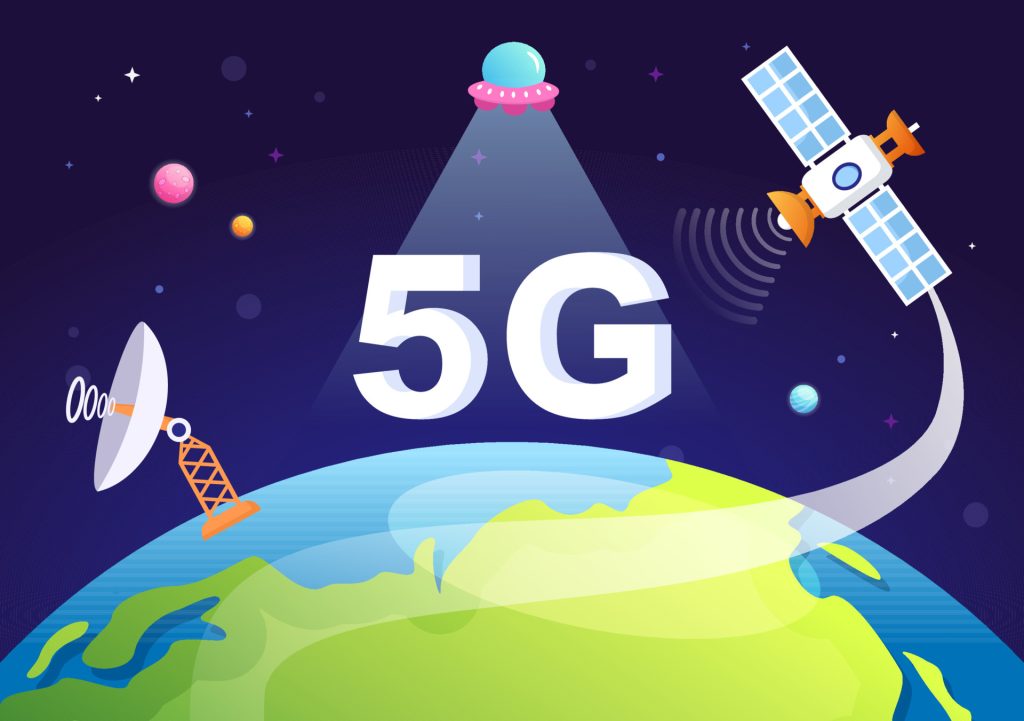
Satellite internet works like this: a satellite in orbit communicates with equipment on the ground. This equipment is a parabolic antenna (or a flat panel, in the case of more modern services) connected to a router and a power source. A cell phone never communicates directly with the broadband satellite—it communicates with the router's Wi-Fi, which in turn communicates with the antenna.
There are three technical and legal reasons why a single app cannot replace this set:
- Antenna and power. A cell phone radio is designed to reach a tower a few kilometers away, not a satellite hundreds or thousands of kilometers away. It lacks power and the right type of antenna.
- Licensed frequency. The frequency bands used by broadband satellites are licensed. In Brazil, operators need authorization from... Anatel. It is not an open network that any application can "find".
- Cost of the service. Launching and maintaining satellites costs billions. This cost is paid for through monthly subscriptions. No company distributes this capacity for free to the general public.
Therefore, when an advertisement or video promises "download this app and get unlimited satellite internet," it's describing something that doesn't happen. At best, the app is just a poorly explained satellite locator. At worst, it's an app full of ads, with abusive permissions, or a file from outside the official store that could compromise your device.
What satellite applications actually do.
Apps with names like “SatFinder,” “Satellite Finder,” or “Satellite Director” are installation tools. They use the phone's compass, GPS, and accelerometer to determine the direction (azimuth) and angle (elevation) your antenna needs to be at to see a particular satellite. Several of them show this in augmented reality: you point the camera at the sky and the app draws the satellite's position.
This is very useful for anyone installing a satellite TV antenna, an over-the-air receiver, or a satellite internet provider's terminal. But it's worth repeating: They help to aim the antenna, they don't provide a connection.. Without an antenna, the app is just a pretty compass.
SatFinder Lite
A simplified and lightweight version of a satellite finder. It shows a list of visible satellites from your location and the angle at which the antenna needs to be fixed. It's the typical choice for those who want to adjust their home satellite dish without calling a technician. It's available in the official Android store: SatFinder Lite – TV Satellites on Google Play. On your iPhone, search for “SatFinder” in App Store.
SatFinder e SatFinder PRO
They offer a larger satellite database and fine-tuning capabilities, including LNB calculation and camera visualization. They are well-suited for more complex installations or for those working with more than one satellite. Available at Google Play (SatFinder) and in PRO version. Again: these are targeting apps, not connection apps.
Localizador de satélites (Satellite Director)
It works with a real-time compass and camera overlay, with an audible alert when the phone is pointed at the chosen satellite. It's very helpful on rooftops, where it's difficult to look at the screen and adjust the antenna at the same time. Download it from [link/website/etc.]. Google Play.
Where to find truly free internet?
Now for the part that interests those who want to save data: free internet exists, but it's only available through public Wi-Fi and digital inclusion programs, not through home satellite services. See the options that work.
Wi-Fi público de praças, bibliotecas e transporte
Many municipalities maintain open Wi-Fi in squares, bus terminals, health units, and libraries. Airports, shopping malls, fast-food chains, and coffee shops also offer free access, generally with a simple login screen. It's the most reliable source of free internet on a daily basis, and it doesn't require any app: just open the list of networks on your phone.
WiFi Map
WiFi Map is a collaborative map: users register public Wi-Fi hotspots around the world, with their location and notes. It's useful when traveling, to know in advance where there's a free network near your hotel, bus station, or city center. The app also sells eSIM and VPN services—these are paid features, and the app makes this clear at the time of purchase. Available on... Google Play and in App Store.
An important warning about this type of app: only use truly public hotspots. Accessing a private network with a password that someone else posted without the owner's permission is unauthorized access, and it's also a great way to expose your data to whoever controls that network.
Instabridge
It follows the same logic as WiFi Map, with a large database of public hotspots and automatic connection to already known networks. It's useful for those who travel a lot around the city and want to save on data allowance. It's on... Google Play and in App Store. If you want to delve deeper into this path, we have a dedicated guide to it. apps to find free wifi.
Programas públicos de conectividade
The government maintains initiatives for free or subsidized access, especially in rural areas and suburbs. Schools, telecenters, and community hotspots fall into this category, and part of this infrastructure reaches them via satellite links contracted by the government itself—the program pays the bill, not the user. It's the closest thing to "free satellite internet for the user," and even then, it depends on you being within a service area: it's not something you activate via your cell phone.
These initiatives change name and scope with each administration, so the practical way to go is to check the current list on [website/platform name]. page of programs and actions of the Ministry of Communications And, most importantly, ask at your local city hall, school, or health center which locations are currently open. Local information is usually more up-to-date than any national list.
Benefícios da sua própria operadora
Before searching for another network, check what your plan already includes: some packages include apps that don't use up your data allowance, free Wi-Fi access for customers, and data bonuses at specific times. This information is available in your carrier's official app. If you use two numbers or travel frequently, it's also worth understanding the difference between... eSIM and physical chip before purchasing additional data.
How to use free Wi-Fi safely
An open network is convenient, but it's also the preferred environment for those who want to intercept data. Some simple precautions resolve most of the risk:
- Avoid accessing your bank account, digital wallet, or making purchases while on a public network.
- Confirm the exact name of the chain with an employee at the location. Fake chains often mimic the establishment's name.
- Turn off automatic connection to open networks in your Wi-Fi settings.
- Prefer websites with HTTPS and be wary of invalid certificate warnings.
- When you leave, tell your phone to "forget" the network so it doesn't reconnect automatically later.
- Keep your system and apps updated; many attacks on public networks exploit old vulnerabilities.
Common scams promising free satellite internet.
This is a topic that attracts scams because it mixes a genuine desire (to save money) with technology that most people don't fully understand. Watch out for these signs:
- APK file not available in the store. If the "unlimited internet app" is only available via a direct download link, in a messaging group, or on an unknown website, do not install it. Legitimate apps are found on Google Play or the App Store.
- Activation fee charged. Requests for PIX payments, "chip shipping," or "signal activation" are classic scams. No legitimate satellite service charges for activation via private message.
- Starlink kit giveaway. Fake profiles advertise kits that are either "given away" or "factory defective" at ridiculously low prices. Equipment purchases should be made on the operator's official website or through an authorized reseller.
- Disproportionate permissions. A satellite locator needs sensors and, at most, location data. If it asks for contacts, SMS, accessibility, or device administration, uninstall it.
- Promise of unlimited data via VPN. Apps that claim to "free up internet without a SIM card" are often a front for data theft or fraud against your mobile carrier. Don't use them.
- Websites that mimic the official store. Always check if the address starts with play.google.com or apps.apple.com. Similar variations are a trap.
What if I really need internet in a remote area?
When there is no fiber optic coverage or decent cell phone signal, paid satellite internet is a legitimate and increasingly common solution in rural areas. It's worth understanding the cost structure before deciding: you pay for the equipment (kit with antenna and router), possibly the installation, and then a monthly fee. Services like... Starlink and the HughesNet They publish prices and availability by address on their official websites — check there, because prices and plans change frequently.
Before resorting to satellite, however, try alternatives that are usually cheaper: a 4G router with an external antenna pointed at the nearest tower solves many cases of weak signal, and regional radio providers serve rural areas for a much lower price than satellite. If your problem is weak Wi-Fi signal at home, and not a lack of provider, there's a different approach: see how. Optimize your home Wi-Fi signal..
Common questions
Existe algum app que dá internet via satélite de graça?
No. All satellite broadband services require ground-based equipment and a subscription. Apps that promise otherwise are either lying or are simply antenna locators with misleading descriptions.
Meu celular consegue falar com satélite?
Some recent models already include satellite messaging or emergency calling capabilities, but this depends on the device, the carrier, and the country, and is for short text messages in emergency situations—it's not for browsing. Check the official support pages of your device's manufacturer to see if the feature is active in Brazil.
O SatFinder me conecta à internet?
No. It indicates the direction and tilt for you to position an antenna. The connection comes from your contracted provider, through that antenna.
Wi-Fi público gratuito é seguro?
It's acceptable for general browsing, as long as you follow the precautions listed above and avoid sensitive data. The biggest risk isn't the official network of the site, but rather fake networks with similar names.
Conclusion
Free internet via satellite by downloading an app is a promise that technology doesn't deliver on—and recognizing this saves time, money, and security risk. What you can do, and do well, is use satellite location apps when you have an antenna to install, map public Wi-Fi hotspots with apps like WiFi Map and Instabridge, take advantage of public connectivity programs, and check the benefits your provider already offers.
If your need is for a permanent connection in an area without coverage, then satellite internet becomes a contracted service, with transparent equipment and monthly fees. Download everything only from official app stores, be wary of any offer that asks for payment outside of the companies' channels, and remember the rule that sums it all up: when someone promises unlimited connectivity for free, you are usually the product.