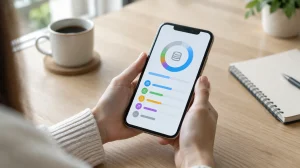
Is your Android smartphone slow and full of files you don't even remember downloading? This is one of the most common complaints from those who have been using the same device for several years, and the cause is almost always simple: storage at its limit and apps accumulating data in the background.
To do a Cleaning on Android This method helps free up space and restore some fluidity to the device. An honest warning is in order right from the start: no cleaning app will turn an old phone into a new one. The real benefit comes from freeing up storage, removing apps you don't use, and organizing files — and that's exactly what this guide shows you how to do, step by step and with reliable tools from official app stores.
Why does Android get slower over time?
When the storage Internal storage exceeds approximately 90% of capacity, the system loses room for maneuver in saving temporary files, and slowness appears in everything: camera, keyboard, app opening. Added to this are accumulated cache, forgotten downloads, videos received in messaging groups, and apps installed out of curiosity that were never opened again.
Therefore, a Cleaning on Android Periodic maintenance is basic, not magic. It releases memory It reduces storage capacity, lowers the chance of the system crashing due to lack of space, and makes it easier to find what matters. What it doesn't do is increase physical RAM, speed up the processor, or restore the battery's original capacity—be wary of any app that promises this.
The 5 best apps to clean your Android.
All the apps below are available on Google Play. Always install from the official store: APK files from random websites are the main gateway for malware on Android phones.
1. Files (Google Archives)
O Files, from Google, It's free, lightweight, and probably already installed on your device. It analyzes your storage and suggests what to remove: duplicate files, memes and images received in messaging apps, large videos, and apps you haven't opened in months.
The app's strong point is its transparency — it shows what it's going to delete before deleting it, category by category, which reduces the risk of losing something important. It also transfers files to the SD card or to the cloud and has offline transfer between nearby phones.
For most people, Files automatically solves a large part of the problem. Cleaning on Android, free of charge and without aggressive advertising.
2. CCleaner
Known in the PC world, the CCleaner for Android clean cache of apps, browsing history, empty folders, and junk files that take up space without any use.
It also shows which apps are consuming the most resources and allows you to uninstall several at once, which usually frees up more space than clearing the cache itself.
The free version is sufficient for home use. The Pro subscription adds scheduled cleaning and priority support; check the current price on the Play Store page itself, as it changes frequently.
3. SD Maid
O SD Maid It's the most technical one on the list. Its specialty is orphan files: folders and databases left behind by uninstalled applications that continue to occupy space. storage.
It scans the system in great detail and allows you to create cleaning rules per application. However, it requires a bit more attention from the user—it's worth reviewing the list before confirming any deletions.
It's the best choice for those who like fine-grained control and already have some familiarity with Android folders.
4. AVG Cleaner
Developed by the security company AVG, the AVG Cleaner It combines storage cleanup with battery and mobile data usage reports.
One useful feature is photo analysis: it identifies blurry, dark, or virtually identical images and suggests deleting the worst ones while keeping the best from each sequence. Since photos and videos are often the biggest space hogs, this is the kind of cleanup that really frees up gigabytes.
The interface is simple, and there's a scheduled cleaning option in the paid version.
5. Avast Cleanup
O Avast Cleanup It follows the same principle: it identifies large files, redundant photos, cache, and rarely used applications, presenting everything in a single panel.
The app also suggests putting apps you rarely open into hibernation, which reduces battery and background data consumption without needing to uninstall them.
It's a good option for those who prefer an assistant that organizes suggestions instead of manually searching through folders.
Advantages
✓ More real free space
Cleaning removes cache, old downloads, and duplicate media. This is the most concrete and measurable benefit: gigabytes of space that become available again for photos and new applications.
✓ Fewer crashes due to lack of space.
With ample storage, the system once again has space for temporary files. This reduces crashes and "storage full" messages, which are usually the real cause of perceived slowness.
✓ A clear view of what takes up space.
The apps show, in order of size, what is consuming the storage. That visibility alone helps in deciding what to delete without kicking.
✓ Batch uninstallation
Removing apps you haven't opened in months at once frees up space and eliminates background processes — a small but real gain in battery and data usage.
✓ File organization
Moving old photos and videos to the cloud or to an SD card keeps your device leaner and also protects this content in case your phone is lost or broken.
✓ Simple maintenance routine
A ten-minute monthly review prevents the problem from recurring. It's more effective than hastily pressing any "optimize" button.
What to expect (and what not to expect) from cleaning.
It's important to separate expectation from reality. Freeing up storage and uninstalling apps usually resolves the most obvious symptoms of slowness, especially on devices that were almost out of memory. The effect is noticeable, but gradual, and depends on the initial state of the phone.
On the other hand, "clearing RAM" every five minutes doesn't make Android faster: the system manages memory automatically, and forcibly closing an app will simply reload it later, wasting more battery. Similarly, no app recovers the chemical capacity of a depleted battery or increases processor power.
If the device continues to be slow even with plenty of free space, the likely causes are different: an outdated system, hardware that is too old for current apps, or a battery at the end of its lifespan—the latter case can be resolved with a replacement at a service center, not with software.
How to manually clean Android without installing anything.
Before installing any app, it's worth using the one the system itself offers. On most devices, the path is Settings > Storage (on some models, Settings > Battery and device maintenance > Storage). There you'll see a graph showing usage separated by category: images, videos, audio, documents, apps, and temporary files.
Step 1 — Identify the largest consumers. Tap on the category that takes up the most space. It's almost always videos and images, followed by messaging apps, which keep copies of everything you receive in groups.
Step 2 — Clear the cache of the most resource-intensive apps. In Settings > Apps, select the app, go to “Storage,” and tap “Clear cache.” This doesn't delete your conversations or accounts, only temporary files. Avoid the “Clear data” button, which resets the app as if it were newly installed.
Step 3 — Review the Downloads folder. It's the forgotten storage of your phone: PDFs, payment slips, installers, and images downloaded months ago. Carefully deleting this folder usually results in several gigabytes of data.
Step 4 — Uninstall what you can't open. Sort your list of apps by size and ask yourself when you last used each one. If you can't remember, you can probably uninstall it—you can always reinstall it later from Google Play.
Step 5 — Back up the media and free up local copies. After uploading old photos and videos to the cloud, use the free-up space option of the service you're using. Confirm that the backup is complete before deleting anything from your device.
Step 6 — Restart your phone. A system restart terminates frozen processes and clears temporary system files. It's simple, free, and resolves most sudden slowdowns.
This manual routine usually yields the same results as cleaning apps, with the advantage of allowing you to see exactly what you're deleting. Apps are used for convenience, to automate this sweep and suggest what you might have missed.
Common mistakes when cleaning your cell phone.
Install multiple cleaning apps at the same time. They all perform the same task, compete for permissions, and run in the background. The result is the opposite of what you want: increased battery and memory consumption. Choose one and uninstall the others.
Force-closing apps all the time. Swiping through all the cards in the recent apps list multiple times a day doesn't speed up Android. The system keeps apps in memory precisely to reopen them quickly; by closing them, the next loading consumes more processing power and more battery.
Installing "optimizers" from outside the official store. Websites offering APK files of "turbocharged" cleaning apps are one of the most common ways malware is distributed on Android. If the app isn't on Google Play, don't install it — the official, safe installation instructions are available on Google Play. Google Play Help.
Granting permissions that don't make sense. A cleaning app only needs access to files. Requests for access to contacts, SMS, calls, microphone, or precise location should be immediately viewed with suspicion.
Deleting system folders on your own. Removing directories with technical names using a file manager can break applications and, in extreme cases, require formatting the device. If you're not sure what the folder is, leave it where it is.
Expecting a hardware miracle. If your phone is six or seven years old, runs an older version of Android, and freezes even with half its storage free, the problem is physical. In this scenario, replacing the battery or the entire device will solve the problem; no software solution will fix it.
Comparison between the apps
| Application | Key features | Ease of use | Model |
|---|---|---|---|
| Files (Google) | Junk removal, file manager, offline upload | Very easy | Free |
| CCleaner | Clear cache, analyze storage, and uninstall in batch. | Easy | Free, with optional subscription. |
| SD Maid | Orphaned files, rules per app, advanced manager | Average | Free, with an optional paid version. |
| AVG Cleaner | Analysis of photos, cache, battery consumption, and data. | Easy | Free, with optional subscription. |
| Avast Cleanup | Large files, redundant photos, app hibernation | Easy | Free, with optional subscription. |
Paid plans change prices frequently and vary by country. Check the current price on each app's page in the Google Play Store before subscribing.
How to choose the best app
If you want the simplest and free way, start with Google Files. It covers the essentials. Cleaning on Android No cost and no hassle, and in most cases it's all you need.
If you're looking for more advanced features, such as cleaning up leftover files from uninstalled applications, SD Maid is the most complete. Those who prefer a panel that suggests ready-made actions tend to do better with CCleaner, AVG Cleaner, or Avast Cleanup.
In any case, consider three points before installing: the developer's reputation in the store, the permissions requested, and the amount of advertising. A cleaning app doesn't need access to contacts, messages, or microphone to work—if it asks for it, be suspicious.
Usage tips and recommendations
Start by uninstalling apps that you haven't opened in months. This is usually the action that frees up the most space at once, and it also eliminates processes running in the background.
Next, review photos and videos. Sending your old collection to the cloud or an SD card frees up several gigabytes and protects the material from being lost on your device. Then, clean the... cache Of the most resource-intensive apps, browsers and messaging apps usually top the list.
Perform this review once a month and avoid keeping two or three cleaning apps installed at the same time: they overlap and end up consuming resources instead of freeing them up. If you prefer to forgo third-party apps, Android itself has a native storage manager — the official step-by-step guide is available in [link to Android documentation]. Android Help.
Common questions
How often should I clean my Android?
One review per month is sufficient for most people: deleting old downloads, reviewing photos, and uninstalling what they don't use. Daily cache cleanups don't provide any noticeable benefit.
Is it safe to use third-party cleaning apps?
Yes, as long as you install it from Google Play and check the reviews and permissions. Files, CCleaner, SD Maid, AVG Cleaner, and Avast Cleanup are developed by well-known companies. Avoid installing APK files from external websites.
Does clearing RAM make your phone faster?
Not in a lasting way. Android manages RAM automatically and forcibly reloads closed apps, which can even increase battery consumption. The real gain comes from freeing up storage and removing apps you don't use.
What are "orphan" files?
These are folders and data that uninstalled applications leave behind and continue to take up space. SD Maid is the app on the list most specialized in locating and safely removing them.
Does cleaning Android improve battery life?
Uninstalling apps that were running in the background might help a little. But no app can restore the capacity of a battery worn down by time—in that case, the solution is to have it replaced at a repair shop.
Conclusion
Cleaning up your Android device is routine maintenance, not a performance trick. Freeing up storage, reviewing photos, and uninstalling inactive apps resolves a good portion of everyday slowdowns, especially on devices with low memory.
Among the options presented, Google Files meets most needs at no cost; SD Maid offers detailed control; and CCleaner, AVG Cleaner, and Avast Cleanup work well for those who prefer ready-made suggestions in a single panel. All are available on Google Play, and that's where you should install them.
Choose one, set aside ten minutes a month for cleaning, and keep your expectations in check: your phone will be more organized and stable, even if it remains the same device you've always had.