Certainly, the number of people who like listen to gospel music. And seeking to serve this public especially, many are the applications to listen to gospel music that will allow you to listen to your favorite songs whenever and wherever you want even if you are not connected to the Internet.
Here we have gathered the best options for you. From these applications you can simply add your favorite songs to your playlist and listen to them at any time.
How about setting up yours? playlist with the gospel songs you like most?
Technology, and especially its advancement, has made it possible for the user to carry out a series of different activities, including listening to music, which ends up being one of the most common.
But without further ado, let's get to the applications that can allow you to listen to gospel music whenever and wherever you want.
Listen to gospel music through the Spotify app
O Spotify is without a doubt one of the applications best known for listening to music and, as it couldn't be otherwise, it offers an excellent repertoire of gospel songs.
The range of artists in Spotify It grows every day and your favorites will definitely be there.
Additionally, you can download the songs to listen when you are offline, being an excellent feature of the application.
Deezer
O Deezer is another very interesting application when we talk about gospel music. It allows, just like the Spotify, you can listen to your music whenever and wherever you want. To do this, it is necessary to carry out the download of music and create your offline playlist. So you can listen with the application even without connection.
It is worth mentioning that the Deezer It has a wide repertoire of artists and, of course, it has excellent options of gospel artists for you.
It is a very dynamic and intuitive application for listening to gospel music at any time.
Apple Music
This may be one of the least known, but it also has excellent functionality and guarantees the user a good experience when listening to their favorite gospel songs.
O Apple Music allows you to create your own playlist with your favorite hymns and listen whenever you want, wherever you are. If you choose to download the song, you can listen to it without any major headaches. offline.
For those who believe that the application is not available for Android, yes it is and allows users of this operating system to also listen to their favorite music from the application. In other words, an excellent experience.
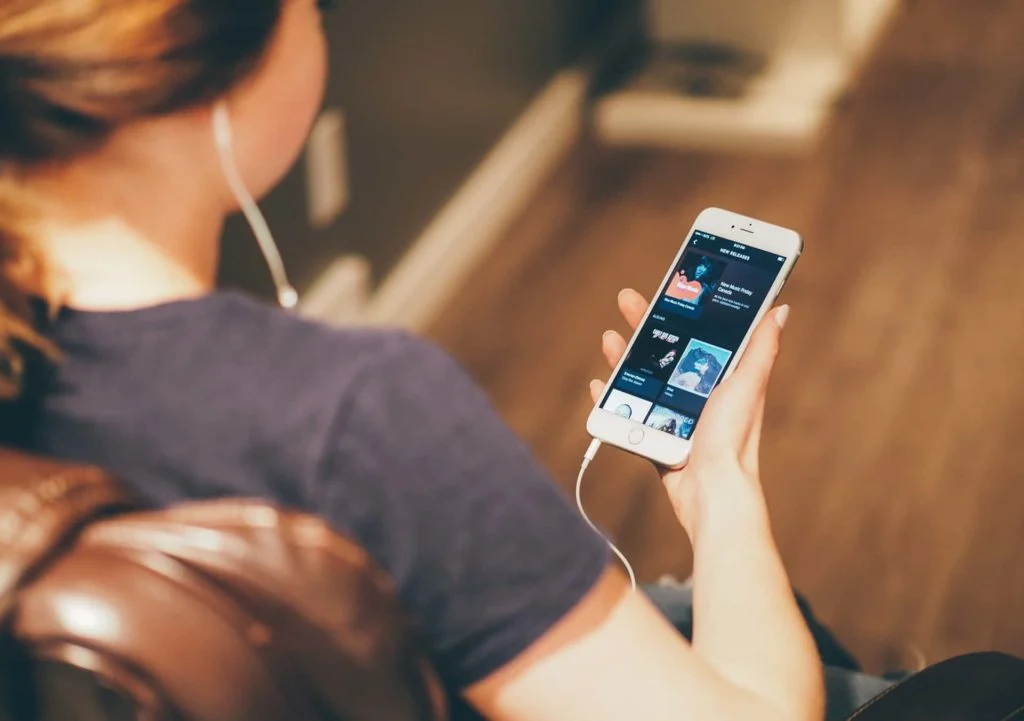
Bruna Karla Gospel Music
This application is well targeted, being preferred by fans of singer Bruna Karla, bringing them an excellent experience with the artist's sounds.
O application presents the singer's best sounds and allows you to enjoy excellent moments.
When carrying out the download of your favorite songs, just like in the previously mentioned applications, you can listen to them even if you are not connected to the internet, which can be a good option to save on your mobile data plan.
Another interesting difference from the application is to allow users to directly access the lyrics of the song while listening to it.
Before deciding, check these points.
- Data usage. Streaming in high quality consumes a lot of data. Adjusting the quality on your phone will prevent surprises when it reaches your data limit.
- Audio quality available. The bit rate varies by plan. On standard headphones the difference is subtle; on better equipment, it's noticeable.
- Catalog in Portuguese and local format. International streaming services sometimes have glitches in sertanejo, forró, and gospel music. If that's what you listen to, test it before subscribing.
- What the free version offers. Generally, it's ad-supported playback, shuffled order, and limited skips. Offline listening and track selection are usually paid services.
What these apps don't do
Every category has a limit, and knowing this one's limit saves time and money by avoiding those who promise more than what's available.
- They don't allow downloading the music as a free file. The download is within the application and requires an active subscription.
- Lyrics and credits depend on what the record label sent and are sometimes incomplete.
- Losing your subscription means losing access to what you downloaded — it's not a purchase, it's a usage license.
- An app that offers paid content for free is piracy and often comes with intrusive advertising or malware.
Common questions
Can I listen for free?
It's possible, with advertising and some limitations, such as random order and a restricted number of jumps.
Does the quality change significantly between plans?
With regular headphones, the difference is minimal. With better equipment or a good speaker system, the difference becomes noticeable.
Can I transfer my playlists?
There are services that migrate playlists between platforms. The transfer usually works well, with occasional losses of unavailable tracks.
Can I listen without internet?
Only by downloading it within the app, which generally requires an active subscription.
Can I use it in the car?
Yes, via Bluetooth, or through Android Auto and CarPlay in compatible vehicles.
How to truly take advantage of it.
- Reduce the quality of mobile data. In the settings, separate Wi-Fi quality from data quality. This cuts consumption in half.
- Set up the equalizer once. Adjust according to the headphones you use — it's the cheapest way to improve sound quality.
- Let the app learn. Liking and skipping are key to the recommendation. Two weeks of use significantly changes what appears.
- Download playlists via Wi-Fi. Get it ready before you leave. The download is within the app and depends on an active subscription.
Common mistakes that are costly
- Losing created playlists when switching accounts instead of transferring them.
- Installing an app that offers a paid catalog for free is piracy and usually comes with intrusive advertising.
- Cancel your subscription and lose access to all downloaded data.
- Signing up for the family plan without checking the requirement for a shared address.
The alternative that is already included in the system
YouTube functions as a huge free catalog for discovering music, and streaming radio continues to exist within various free apps. For offline listening without a subscription, your own files still play in the system's native player.
Organize the library by period, not by artist.
Those who frequently listen to gospel music accumulate hundreds of tracks and then spend more time searching for them than actually listening. The effective way to do this is to create a few playlists, defined by the time of day rather than the artist.
A structure that usually gets the job done:
- Morning. Music with a lighter tempo, to wake up to and start the day.
- Work. Predominantly instrumental or with a steady tempo, without lyrics that draw attention.
- Transit. Well-known songs that you can sing along to without requiring concentration.
- Prayer and worship. Slow pace, for moments of silence.
- Children's. Separated from everything else, and this separation matters: mixing children's music into the main playlist throws off the recommendations for everything else.
- Sunday. The church's hymns and praises, updated weekly.
Two practices complement each other. First: limit each playlist to 40 or 50 tracks and review it monthly, removing what you skip. A playlist of 300 songs becomes noise. Second: use folders or collections to group the playlists, a feature that most services already offer and that almost nobody uses.
Collaborative playlist for the church group.
Almost every streaming service allows you to create a collaborative playlist, where other people can add tracks via a link. It's the most useful and least known feature for community use.
Applications that work well:
- Repertoire for the next service. The worship team puts together the playlist, everyone downloads it and listens to it during the week. It drastically reduces rehearsal time.
- List of suggestions from the congregation. Each person adds a song they would like to sing.
- Event track. Retreat, camp, party — several people contributing before the date.
- Rotating discovery list. Each week, one person is responsible for adding five new tracks.
Practical tips: define who can edit, because in an open playlist any participant can remove tracks from others; agree on a limit of songs per person; and warn that the playlist is public to anyone who has the link, therefore it's not a place for anything private. If the intention is to use the playlist in a rehearsal with poor internet, each participant needs to download the tracks beforehand — the collaboration is online, offline is individual.
Track releases without relying on the algorithm.
The Brazilian gospel scene produces a lot of music, and much of it doesn't reach automatic recommendations because the artists have a smaller listener base than those in popular music. Here are some direct routes:
- Follow the artist within the service. Following specifically influences the news and releases section, unlike simply liking a song.
- Enable launch notifications., When the app offers it, it's the only way to know on the day.
- Explore by record label and by ministry. Gospel labels feature artists with similar sounds, and browsing through them yields more results than any generic search.
- Use the shares. Tracks featuring two or three artists are the best way to discover new people within the same genre.
- Subscribe to editorial playlists of this genre. They are updated through human curation and anticipate what will be circulating.
- Don't throw away the radio. Gospel radio stations continue to be the channel through which many people discover new music, and several broadcast online.
Here's a helpful adjustment that solves a common problem: if your profile is obsessed with five artists, use the private session to explore different styles without contaminating the recommendations — and when you like something, save it to your library, which is the strongest sign of preference.
Lyrics in another language and what to do with them.
Much of the international worship music repertoire is sung in English, and many people listen without understanding. Here are some practical approaches:
- Synchronized lyrics. Most services display the lyrics along with the music. It's worth knowing that this comes from a separately produced time-stamped file, which is why it's missing from many tracks and is sometimes out of sync.
- Versions in Portuguese. Many international worship songs have Portuguese versions recorded by Brazilian artists. Searching for the translated title will usually yield results.
- Automatic translation. Some text-based apps offer translation. Treat this as an approximation: religious language is full of idiomatic expressions, and literal translation often gets it wrong.
- Be careful with the font. Much of the material comes from open collaboration, with little revision. Before projecting it into a religious setting or printing it, check it against a reliable source.
Listening with quality: what really changes the sound
Before signing up for a high-definition audio plan, it's worth knowing where the bottleneck is — which is almost never the service itself.
The headphones are the dominant factor. The difference between a bad headphone and a decent one is much greater than the difference between 160 and 320 kbps. In low-cost headphones, the two sound the same.
Bluetooth introduces another form of compression. The audio is recompressed for wireless transmission, regardless of the source quality. This is why lossless files rarely arrive intact on wireless headphones.
Volume normalization equalizes the bands. This setting, enabled by default in most services, prevents sudden changes between a quiet and a loud song. If you notice that older recordings sound muffled, that's the problem—you can turn it off in the playback settings.
Improper use of equalization makes things worse. Boosting bass and treble simultaneously will cause distortion in a small speaker. A subtle adjustment of two or three points is sufficient.
A reminder about hearing health that applies to any gender: the widely accepted recommendation is to keep the volume around 60% above maximum and limit headphone listening to about an hour at a time, taking breaks. Hearing loss from exposure to loud sound is cumulative and does not recover. Those who listen to worship music for hours a day on headphones should take this seriously.